UNESCO can be 'moderator' in AI debate: chief to AFP / Photo: JOEL SAGET - AFP
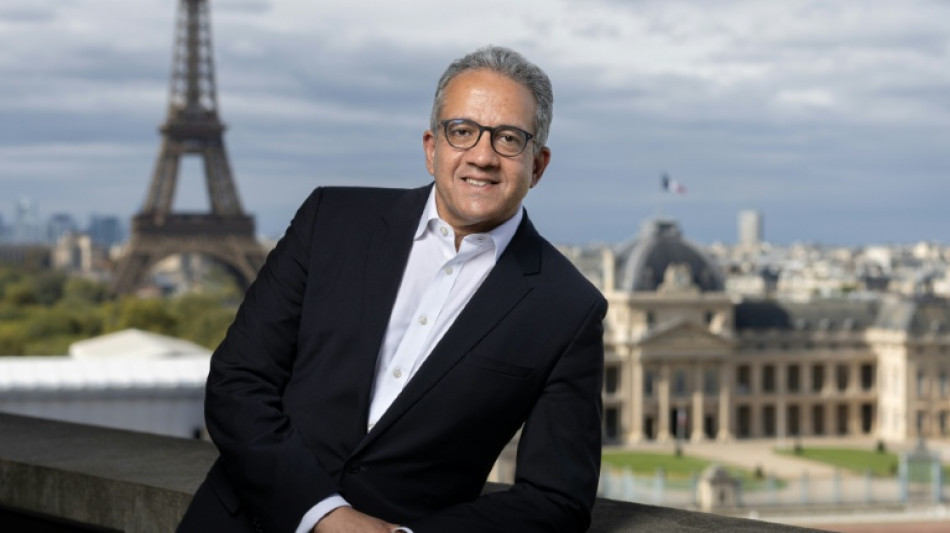
UNESCO chief Khaled el-Enany has proposed in an interview with AFP that the UN culture and education agency become a facilitator in the worldwide wrangling on the risks of artificial intelligence.
"I believe we are uniquely positioned to make UNESCO a true moderator in this global debate," he said as he prepared to welcome Pope Leo XIV, a key advocate for international AI governance, in Paris next week.
The UN educational, scientific and cultural organisation has long stressed that its remit covers more than heritage, looking to advance in areas ranging from access to education to the ethical use of artificial intelligence.
The debate over the potential dangers of self-improving algorithms has surged in recent weeks, with some researchers warning the technology could end humanity, and leaders of AI companies suggesting development needed to be slowed down.
US President Donald Trump has on the other hand called the fears a "hoax".
Enany told AFP: "There is a risk that it will get out of control if we don't intervene."
"This break, this dialogue that has taken place over the past few weeks, is something very positive," he added in the interview on Thursday.
He said the cultural agency had found an "indispensable partner" in the pontiff, who is to visit the UNESCO headquarters in Paris on Friday next week at the start of a four-day trip to France.
"This visit will be the beginning of a very solid partnership to strengthen and protect human dignity in this industrial revolution," Enany said.
It will be the first visit by a pope to UNESCO headquarters since John Paul II in 1980.
- AI 'must be governed' -
Pope Leo, the first US pope, this week warned against delegating to algorithms decisions that should be taken by humans alone.
In his first major document, the encyclical "Magnifica Humanitas" (Magnificent Humanity), published in May, the pope issued a call to "disarm" AI in order to "prevent it from dominating humanity".
Enany said UNESCO had long been concerned with regulating AI, in 2021 issuing a "Recommendation on the Ethics of Artificial Intelligence".
The guide warned about the risk of violations of privacy and the concentration of technological power in the hands of a few states or companies, and well as potential effects on democracy and the environment.
AI is "an extraordinary tool, but one that must be governed in an ethical, inclusive, and fair way," Enany said.
Trump has since returning to office withdrawn the United States from UNESCO, alleging that it is biased against Israel and promotes "divisive" causes.
China -- one of the major global AI players -- has become the agency's largest donor.
Trump had already ordered a departure from UNESCO in 2017 during his first term, before President Joe Biden reestablished US membership.
As the United States rejoined in 2023, then US secretary of state Antony Blinken said it was key Washington was present at UNESCO for decisions "that actually matter", including on "rules, norms and standards for artificial intelligence".
China was among countries to oppose the move.
A.Jonsson--RTC