Lee Reshuffles Cabinet, Nominates First Female NIS Chief
President Lee Jae Myung on Monday initiated a sweeping overhaul of South Korea’s foreign affairs and security leadership, nominating former Justice Minister Kang Kum-sil as the first woman to head the National Intelligence Service. The appointments signal a strategic shift toward closer alignment with Washington and the appointment of close allies to key posts.
President Lee Jae Myung on Monday initiated a sweeping overhaul of South Korea’s foreign affairs and security leadership, nominating former Justice Minister Kang Kum-sil as the first woman to head the National Intelligence Service (NIS). The appointments signal a strategic shift toward closer alignment with Washington and the appointment of close allies to key posts.
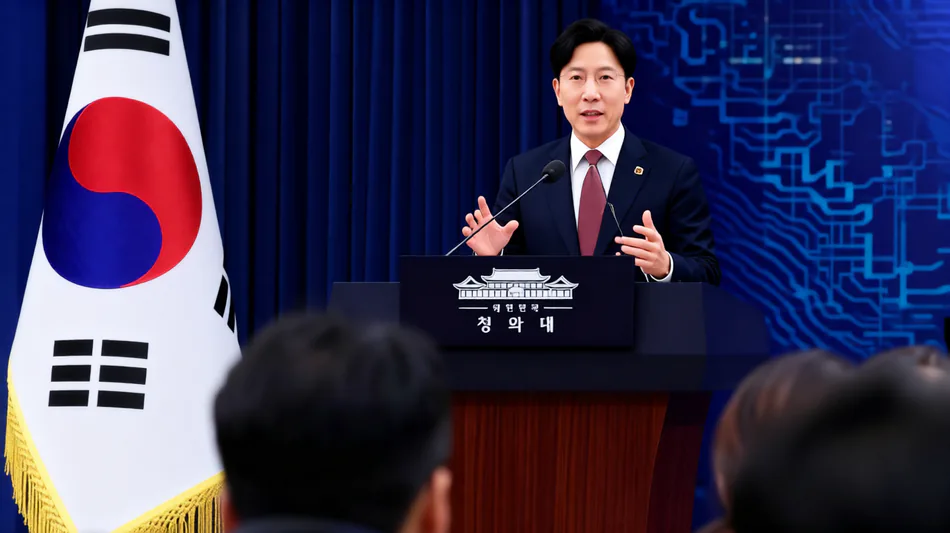
Presidential Chief of Staff Lim Kwang-hyun announced the reshuffle during a press briefing at the Blue House, stating that the president sought to bring "new, fresh forward-looking leadership into state affairs" while accelerating governance and ensuring tangible results for the public. The move replaces several senior ministers who have been viewed as part of a more independent-minded faction within the administration.
If confirmed by the National Assembly, Kang Kum-sil will become the first female director in the history of Korea’s spy agency. She replaces current NIS Chief Lee Jong-seok. Lim described Kang as an "ideal candidate to strengthen democratic oversight of the NIS and to decisively address emerging security challenges, such as cyber threats, through international cooperation." He cited her firm commitment to maintaining the neutrality of state institutions as a primary reason for her selection.
Kang, a former judge on the Seoul High Court, previously served as Korea’s first female justice minister under the liberal Roh Moo-hyun administration. She later chaired campaign support committees for Lee during his 2021 and 2025 presidential bids. Since the beginning of this year, she has served as special ambassador for climate and environment.
The reshuffle also sees significant changes in other critical ministries. Lim Woong-soon, the second deputy national security adviser, was named the new minister of foreign affairs, replacing Cho Hyun. A career diplomat who previously spearheaded the administration’s "national interest-based pragmatic diplomacy," Lim served as ambassador to Canada and held senior roles at the Korean Embassy in the United States.
The president tapped former lawmaker Hong Ihk-pyo as unification minister. Hong, an expert on inter-Korean relations who served three terms in the National Assembly, was described by Chief of Staff Lim as "the right person to lead diverse and practical initiatives aimed at ushering in an era of peaceful coexistence on the Korean Peninsula."
In the interior and safety portfolio, ruling Democratic Party (DP) Rep. Han Jun-ho was appointed minister. A two-term lawmaker and former news anchor, Han is expected to incorporate public voices into policy and strengthen region-led growth. Senior presidential spokesperson Kang Yu-jung was named minister of culture, sports and tourism. With nearly two decades of experience as a film critic and professor, she is tasked with leading Korea toward becoming a "global cultural powerhouse driven by K-culture."
The timing of the reshuffle coincides with critical stages in security negotiations with the United States. The Lee administration is currently navigating discussions on the timeline for transferring wartime operational control from Washington to Seoul, the potential acquisition of nuclear-powered submarines, and revisions to the bilateral civil nuclear cooperation agreement. These talks follow difficult trade negotiations that recently concluded with a tariff agreement.
Analysts view the appointments as a consolidation of power by Lee’s inner circle, replacing what has been characterized as the "pro-autonomy faction" in the previous cabinet. Unification Minister Chung Dong-young and outgoing NIS Chief Lee Jong-seok were often identified as independent-minded players who advocated for pro-North engagement. The shift comes after Washington restricted intelligence-sharing with Seoul following Chung’s disclosure of a North Korean uranium enrichment site during a parliamentary session in March.
Chief of Staff Lim defended the previous team’s record, noting that despite challenging circumstances, the administration had reached a successful conclusion to Korea-U.S. tariff negotiations and mitigated uncertainties in key export industries such as semiconductors. These efforts contributed to the largest current account surplus in the nation’s history.
Lim stated that the latest appointments are intended to "maximize national interest by bringing in new leadership capable of responding to a rapidly shifting international landscape." He emphasized the administration’s commitment to safeguarding national interests across trade, energy, and artificial intelligence sectors.
The education ministry remains vacant as Education Minister Choi Kyo-jin tendered his resignation on Sunday following chaos surrounding last week’s state-run university entrance exam. The Blue House confirmed that the nominee for this position is still under review.
F.Thill--RTC