Clashes erupt outside Kosovo parliament over war crimes court
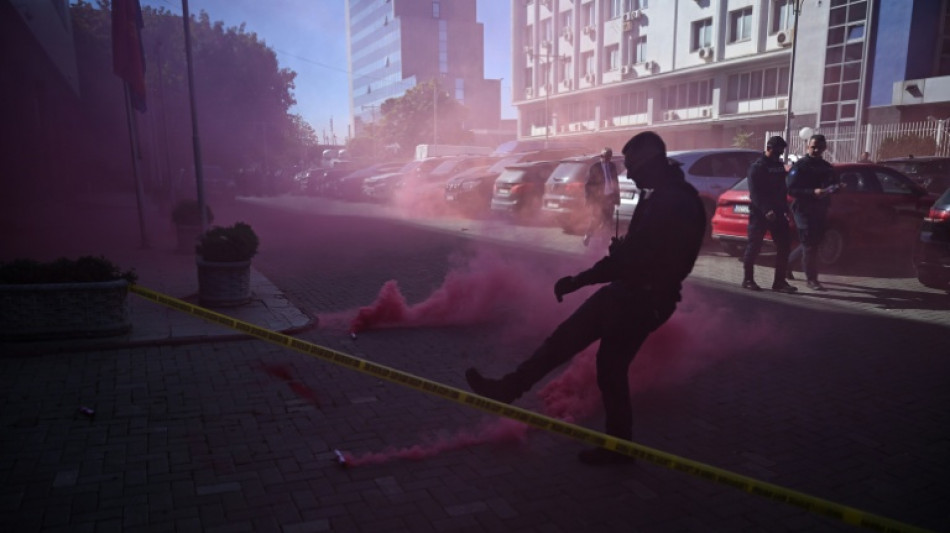
/ Photo: Armend NIMANI - AFP
Police clashed with demonstrators outside Kosovo's parliament on Monday, as protesters demanded the passage of a bill that would curb the powers of the country's war crimes court.
The hours-long stand-off escalated on Monday night as demonstrators decried the sentencing of Kosovo's former president, Hashim Thaci, who was last month sentenced to war crimes committed during the 1990s war for independence against Serbia.
Thaci and three other senior guerrilla figures were handed hefty sentences after being found criminally responsible for murders, illegal arrests, torture and cruel treatment committed by Kosovo Liberation Army fighters.
The verdict sparked outrage and rallies in the Balkan nation where the men are largely regarded as heroes of Kosovo's independence struggle.
Several hundred protesters spent most of the day outside parliament, pledging to blockade the building until lawmakers passed a law aimed at curbing the court's powers.
But as the session ended in the evening without the bill's passage, demonstrators approached police lines in an attempt to stop lawmakers from leaving.
AFP journalists saw riot police use tear gas on the crowd, with some in the group throwing firecrackers at police lines.
Bins were also set alight near the parliament as projectiles were thrown at officers who responded with a water cannon and armoured vehicles.
Opposition parties and war veteran organisations have long criticised the Kosovo Specialist Chambers (KSC), which is established under Kosovo law but based in The Hague.
Under the proposed law change, which passed its first reading on Monday, the KSC would no longer be able to try war crimes and crimes against humanity committed during the war between ethnic Albanian guerrillas and Serb armed forces.
Instead, its jurisdiction would be limited to crimes committed inside Kosovo in the immediate aftermath of the war.
- 'Hasty' -
The proposal would also allow convicts to serve their terms in Kosovo, limit sentences to 15 years and clear the way for presidential pardons.
It will now face parliamentary review before it can return to parliament for a second reading.
The court was established in 2015 under heavy international pressure from the European Union and the United States to investigate crimes committed by guerrilla fighters during the war.
Although it is part of the Kosovo judicial system, the hybrid court is seated abroad -- largely to prevent political pressure and threats to witnesses.
Speaking to parliament, Prime Minister Albin Kurti said his government supported the initial reading but said the proposed law was "hasty" and not properly "thought through".
Even if passed, the law would not affect the current sentences for Thaci and the other men, who have already said they will appeal through the established process at the KSC.
Jensen--RTC