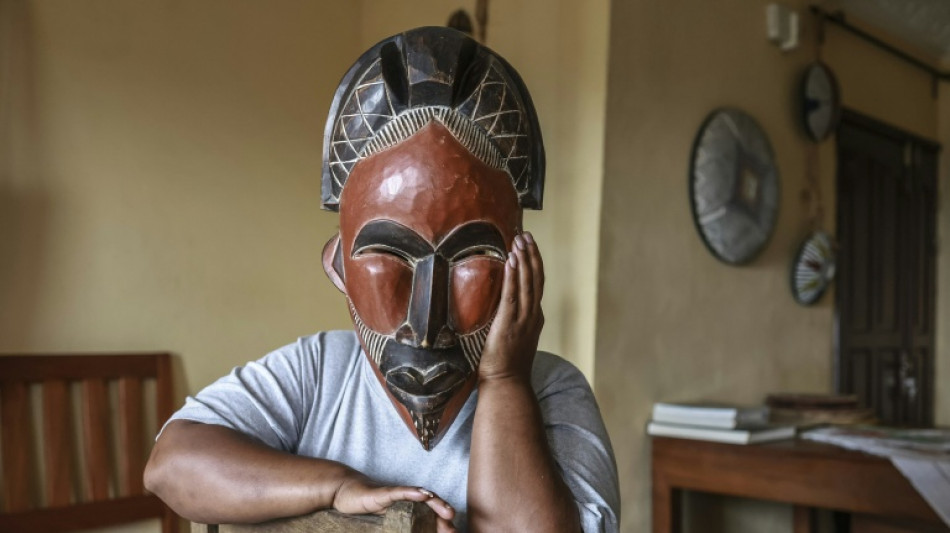
'Hopeless, stuck, afraid': US deportees in limbo in Cameroon / Photo: - - AFP
Ayana was deported to Cameroon from the United States where she had legally lived nearly all her life and now faces uncertainty, far from her family in an unfamiliar country.
Born in a refugee camp in Sudan, she arrived in the US aged two and is among hundreds of people, including with legal protection, deported to African countries over the last 18 months.
"When I was given a map and they told me, 'You're in Cameroon', I said, 'What the heck is Cameroon?' I didn't even know," she told AFP.
Ayana -- whose name AFP has changed for security reasons like all those interviewed for this story -- has been caught up in US President Donald Trump's immigration crackdown, which involves shipping people that the US cannot legally send home to "third countries".
Cameroon is part of a growing list of African countries willing to accept US deportees that includes Eswatini, Equatorial Guinea and Liberia.
For the first time since arriving in late May, Ayana summoned the courage to go out and sat in a bar in the capital, Yaounde, sipping white wine and chain-smoking.
"I was a bit afraid to go out," she said.
The 40-year-old has no memory of Africa and home is San Diego, California, where she studied business and became a nursing assistant and mother, she said.
Several of her family serve in the US military.
About 50 people -- from the Democratic Republic of Congo, Ghana, Angola, Ethiopia, Sierra Leone, Kenya, Senegal, Zimbabwe and Morocco -- have arrived in Cameroon since January.
They include LGBTQ people, even though homosexuality is considered a crime in Cameroon, where authorities have made no official comment about the deportees.
- Shackled -
US Immigration and Customs Enforcement (ICE) agents picked up Ayana as she went to renew her residence permit.
On the flight to Cameroon, her hands and feet were shackled.
"I feel like I've been treated like a slave," she said. "I feel like my rights have been violated throughout the entire process."
Ayana had an Eritrean mother and an Ethiopian father who fled the war between their two countries and were admitted to the United States.
"I'm stateless," she said. "Since I'm not Sudanese, I have no birth certificate, so... I can't go there," she explained.
"I can't go to Ethiopia since I wasn't born there or Eritrea either."
Even if she had agreed to be sent to one of these countries, deadly conflicts are raging in them and she would likely have fallen foul of not having documents.
"We're really not welcome here," she said. "They are just trying to make you tired so that you wanna go back to your country.
"But we cannot because our life is in danger there."
Cameroonian authorities are pressuring deportees to accept a return programme offered by the International Organization for Migration (IOM).
"Everybody here was granted relief by a judge from the US. Their fear was credible," she said.
However, the Trump administration argues that although it cannot send people back to their home countries, nothing prevents it from sending them to third countries.
- Unknown destination -
Peter, a 51-year-old Kenyan country music fan whose son is in the US Navy, spent 25 years in Dallas, Texas, and only found out where he was going "halfway through the flight".
Anthony, a Zimbabwean in his forties, was picked up by the ICE last year after crossing the Mexican border at the end of a long, dangerous trek through central America.
To find peace, he spends most of his free time reading the Bible.
All those interviewed by AFP recounted a similar story of violent deportation to an unknown destination, poor living conditions and abandonment.
Ayana said everyone arrived with just the clothes on their backs. Phones and passports were confiscated.
The IOM has provided hygiene products but they are insufficient, the people say, while medical care is extremely limited.
There is no psychological support and almost all of the deportees have contracted malaria. Peter was even in hospital for three days on respiratory support.
- Forced return? -
Some deportees have already been sent to their home countries or other states, despite the risk of mistreatment.
Two lesbians from Morocco have been living in hiding since their return.
Fru Joseph Awah, the deportees' lawyer, took the issue of forced returns to a Cameroon court, arguing that it broke international law and should be suspended immediately.
"Cameroon is not going to give us the opportunity to stay here and make a life here. They did it for money," Ayana said.
An AFP investigation revealed that Washington offered deals worth millions of dollars and threatened visa restrictions to push third countries to accept.
Anthony and Peter have had interviews with the UN refugee agency, which could grant them refugee status, although Cameroon may still choose not to accept.
Others have received a summons for an interview in April next year.
"I am feeling stuck here, hopeless," whispered Ayana, clinging to the idea that a new US administration in 2028 may permit her return home.
D.Nielsen--RTC