Trump reimposes Iran naval blockade, threatens Hormuz fees
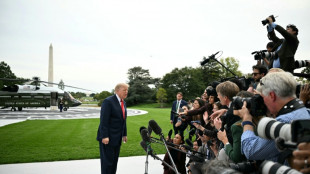
President Donald Trump reimposed a US naval blockade on Iranian ports on Monday and vowed hefty fees for ships transiting the Strait of Hormuz, as Tehran mockingly pledged to charge a lower rate for passage through the strategic waterway.
The maritime blockade was due to begin at 2000 GMT on Tuesday, the US military said, as oil prices shot up around nine percent after both sides traded attacks, raising fears of renewed conflict.
Iran's top diplomat insisted Tehran would be a fair guardian in charging tolls on the waterway vital for oil and gas trade, while the Iranian military command insisted it would not allow the US to interfere in the management of the strait.
In a post on his Truth Social site, Trump declared that the US would be "known as 'THE GUARDIAN OF THE HORMUZ STRAIT'," and "be reimbursed, at the rate of 20% on all cargo shipped, for any and all costs necessary to do the job of providing safety and security to this very volatile section of the World".
While Iran's ports would again be blockaded, he said, "all other countries will have fair and open use of the strait".
Iranian Foreign Minister Abbas Araghchi immediately mocked Trump's threat to impose swingeing fees, saying Tehran would charge a lower rate.
"POTUS is absolutely right. Whoever provides secure and safe passage of commercial vessels through the Strait of Hormuz should be compensated for this service," he wrote on X.
Tehran's top diplomat said Iran had "always been the GUARDIAN" of the strait and would "remain so FOREVER", claiming it would charge fair tolls for safe passage. "20% is of course too much," he said.
The competing claims over the strait came as the two sides traded attacks of a scale unseen since an April ceasefire came into effect.
The US military said it hit dozens of targets on Monday, while Iran's Revolutionary Guards announced new strikes in response on Bahrain, Jordan, Kuwait and Oman.
The US has vehemently opposed Tehran's desire to charge tolls in the strait, which international law generally forbids.
After Trump flipped the script on Monday, the spokesman for Iran's Khatam Al-Anbiya military command insisted that Tehran "under no circumstances will allow... the United States to interfere in the management" of the strategic waterway.
- 'In crisis' -
Despite last week declaring the ceasefire with Iran over, Trump has said negotiations aimed at finding a permanent settlement would continue.
He told Fox News that there were hours of talks on Sunday.
Iran's foreign ministry spokesman Esmaeil Baqaei said earlier on Monday that the June memorandum of understanding that formed the basis for the negotiations and lifted the US blockade was "in crisis".
The previous blockade, in place from April to June, cut off Iranian oil exports and threatened a damaging shutdown of the industry.
Baqaei said Iran would ignore its obligations under the deal if the US did the same, but nonetheless added that Tehran was continuing talks with mediators from Qatar, Pakistan and Oman in a bid to prevent further escalation.
Pakistan, a key intermediary in negotiations, expressed "deep concern at escalation in regional tensions", according to its foreign office.
But analyst Bader Al-Saif said the escalating attacks would merely delay a permanent agreement.
"Both sides want to end the impasse on their own terms, and they are increasingly finding it difficult to do so. Hence the return to and increase in the scale of attacks," said Al-Saif, an associate fellow at Chatham House.
- 'Heinous attacks' -
Iranian state media reported deaths in the latest US strikes, which it said targeted large areas across the south and west.
At least 25 people have been killed in Iran since hostilities resumed on Wednesday, according to an AFP tally based on Iranian announcements.
United Nations Secretary-General Antonio Guterres on Monday expressed "deep concern" at the regional escalation, including attacks by both sides.
Iran's Revolutionary Guards said they had struck US military targets and bases in Jordan, Bahrain and Kuwait, state media reported on Monday.
Air raid alerts sounded in Bahrain, where the military said it shot down a number of Iranian projectiles, while Kuwait's army said the country's forces were intercepting "hostile aerial targets".
Jordan's army said it had intercepted four Iranian missiles.
Iran insists that it only targets US interests in the Gulf, but on Monday afternoon, the spokesman for its military command said that any collaboration by Gulf countries with the United States would be considered "an act of war".
burs-dcp/jfx/dc
O.Greco--RTC