'I can't walk anymore': Afghans freeze to death on route to Iran / Photo: Mohsen KARIMI - AFP
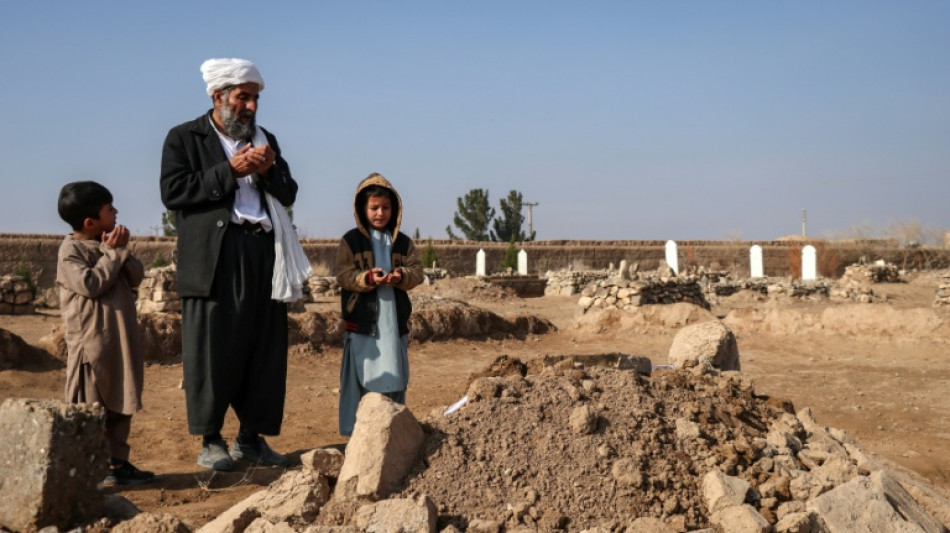
Habibullah set off from his home in western Afghanistan determined to find work in Iran, only for the 15-year-old to freeze to death while walking across the mountainous frontier.
"He was forced to go, to bring food for the family," his mother, Mah Jan, told AFP at her mud home in Ghunjan village.
"We have no food to eat, we have no clothes to wear. The house in which I live has no electricity, no water. I have no proper window, nothing to burn for heating," she added, clutching a photo of her son.
Habibullah was one of at least 18 migrants who died last month while trying to cross illegally into Iran from Afghanistan's Herat province, according to officials, when temperatures were around -3C.
With earthquakes and drought compounding a daily struggle to survive in Afghanistan, around half the population will need humanitarian assistance this year, according to the United Nations.
"There was no other way left for me. I thought, let him go to make our life better," said Mah Jan, 50, who requested the family's surname not be published for privacy reasons.
Habibullah's stepbrother, Gul Ahmad, said the teenager had tried shoe polishing but only earned up to 15 afghanis (23 cents) per day.
"He was ready to be a shepherd for 2,000 afghanis ($30 a month), to work in a shop, but he found nothing. So he was forced to leave. He told his mother, 'Let's trust in God, I'm going to Iran'," said Gul Ahmad, 56.
- 'Very dangerous' -
Habibullah was among 15 bodies returned from Iran, an Afghan border source told AFP on condition of anonymity.
A further three migrants who died were recovered on the Afghan side of the frontier, an army official said.
Over just a matter of days last month, around 1,600 Afghan migrants "who were at risk of perishing due to the weather" were rescued in the mountains, according to Iranian border guard commander Majid Shoja, quoted by the ILNA news agency.
They are drawn to Iran due to greater job opportunities and a common language, but legal routes are limited.
Afghanistan's deputy minister for labour and social affairs, Abdul Manan Omari, said Sunday it was "necessary to do more" to facilitate work permits for migrants.
Iran and Pakistan have combined sent back five million Afghans since September 2023, increasing the country's population by 10 percent, according to the International Organization for Migration.
The agency's deputy head in Afghanistan, Mutya Izora Maskun, said that many in the country report "the economy, job insecurity, food insecurity, constrained access to services" force them to leave.
They do so even if that means going through "illegal crossing points that are very dangerous due to the cold and the risks of human trafficking", she told AFP.
The Taliban government has taken "serious steps to fight the smugglers", interior ministry spokesman Abdul Mateen Qani told AFP.
But attempts to reach Iran have not stopped.
- 'Destitute' -
In the last week of December, "347 people who were trying to illegally cross the border into Iran were identified and arrested", a military unit in western Afghanistan said in a statement on Saturday.
Abdul Majeed Haidari, whose one-year-old son suffers from a heart problem, tried his luck in mid-December.
Working at a brick oven, the 25-year-old could no longer afford to pay for his son's medication and family expenses.
"We left because we were so destitute," his stepbrother Yunus, who accompanied him, told AFP.
"We set out in the rain. In such weather, the radars and cameras of the border guards do not work properly. But the smuggler got lost," he said.
They failed to light a fire for warmth and, as snow fell, Yunus recounted his stepbrother's words: "I can't walk anymore."
"Some told us to leave him so as not to endanger the other 19 people in the group," said Yunus, who requested his full name not be used.
After carrying him for two more hours, "his eyes stopped closing, his body grew heavier," Yunus recalled, before an Iranian family drove past and took them to hospital.
"They gave him electric shocks, but they said he was already dead," said Yunus, who has since returned to his village.
A.Romano--RTC