
As Wall Street Celebrates "Marijuana Rescheduling," the Real Story Is Emerging: The DEA's Own Final Rules Collide With the Political Hype
WASHINGTON, D.C. / ACCESS Newswire / May 7, 2026 / While marijuana stock promoters and political commentators celebrate the idea of federal cannabis rescheduling as if legalization is imminent, a far more dangerous reality is beginning to surface behind closed doors in Washington:
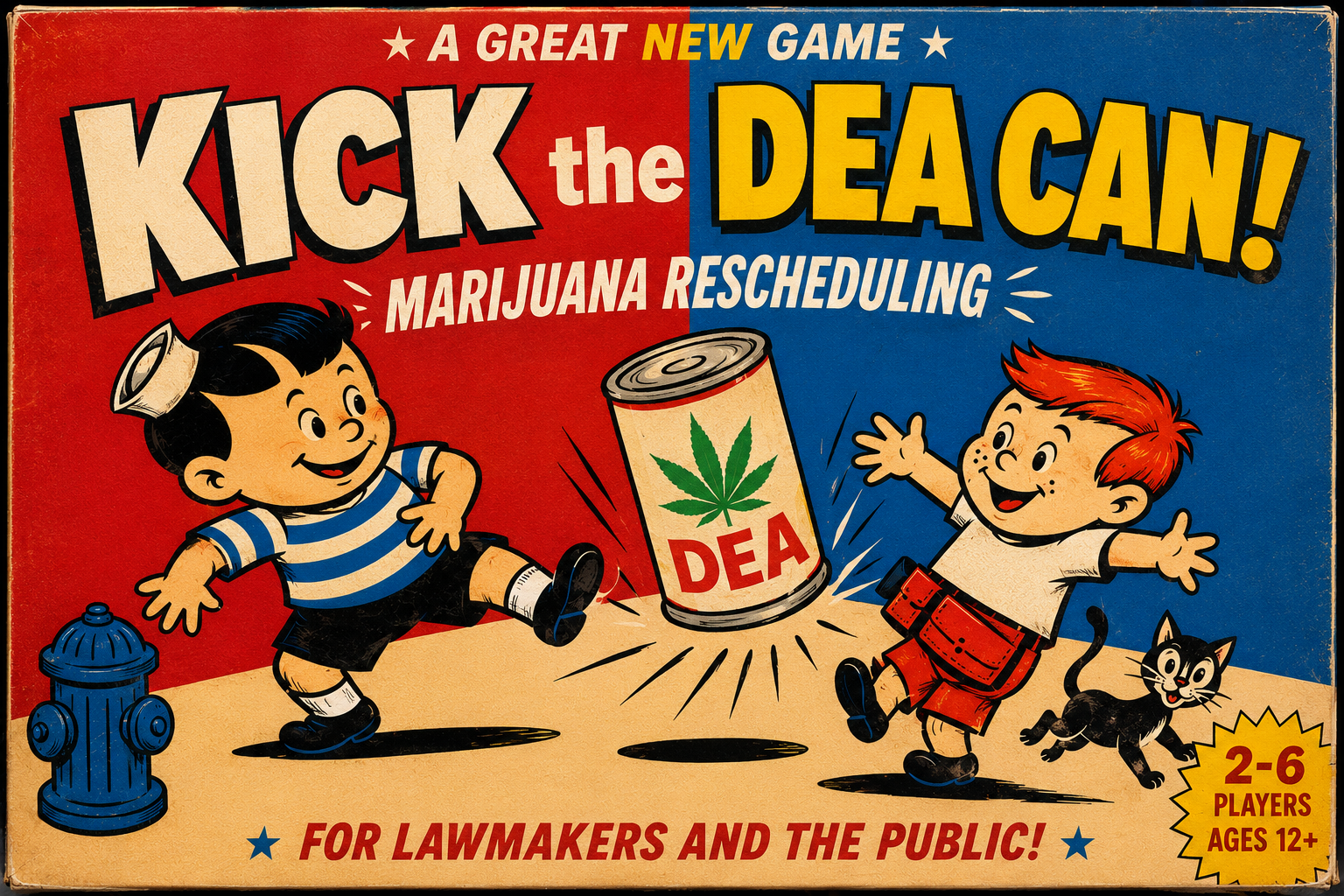
The United States government may now be trapped inside its own regulatory contradictions.
For nearly a decade, companies like MMJ International Holdings and its subsidiary MMJ BioPharma Cultivation followed the federal government's rules exactly as written. They pursued the FDA pharmaceutical pathway. They submitted to DEA inspections. They built compliance systems. They invested millions into botanical drug development, analytical chemistry, security controls, and orphan-drug clinical programs.
They did what the federal government demanded.
And now, after years of delay, obstruction, and shifting political narratives, the same federal agencies appear poised to rewrite the rules in the middle of the game.
The problem?
Administrative law does not work that way.
DEA's "Final Rule" Was Never Designed for the State Marijuana Industry
The public has been sold a fantasy that rescheduling automatically opens the doors to the existing state marijuana industry.
But the DEA's own marijuana manufacturing framework says otherwise.
The agency's Final Rule governing marijuana bulk manufacturing registrations was intentionally restrictive. DEA repeatedly emphasized:
registrations would be limited,
treaty obligations remained binding,
diversion prevention was paramount,
criminal history mattered,
and applicants had to satisfy strict federal "public interest" standards.
The agency never promised blanket approval for commercial state marijuana operators.
In fact, the rulemaking history strongly suggested the opposite.
For years, DEA effectively told legitimate pharmaceutical applicants:
"Follow the FDA pathway, comply with federal law, build pharmaceutical systems, and you may qualify."
MMJ BioPharma Cultivation did exactly that.
Meanwhile, thousands of state marijuana businesses operated entirely outside the federal Controlled Substances Act while Wall Street speculated that one day Washington would simply erase the conflict retroactively.
Now the federal government appears to be attempting exactly that.
And the legal consequences could be explosive.
"Final" Means Final Under Administrative Law
The corporate marijuana industry is learning something federal administrative lawyers already know:
A DEA Final Rule published in the Federal Register is not a campaign slogan.
It is binding federal administrative law.
Under the Administrative Procedure Act (APA), agencies cannot simply ignore their own rules because political priorities changed.
If DEA now attempts to:
suddenly expand approvals,
ignore prior disqualifications,
bypass criminal-history concerns,
or abandon the restrictive framework it previously defended,
courts can strike the action down as:
"arbitrary and capricious."
That phrase may soon become the defining legal battleground of marijuana rescheduling.
Because the contradictions are everywhere.
MMJ BioPharma Followed Every Rule While Others Ignored Them
MMJ BioPharma Cultivation pursued one of the only true federally compliant pharmaceutical cannabis programs in America.
The company:
secured FDA Investigational New Drug applications,
obtained Orphan Drug Designation for Huntington's disease,
developed pharmaceutical soft-gel cannabinoid formulations,
built DEA-inspected laboratory systems,
pursued botanical-drug chemistry under FDA guidance,
and spent years attempting to comply with DEA registration requirements.
Unlike the recreational marijuana industry, MMJ operated under the assumption that federal law still mattered.
That assumption may now expose one of the greatest regulatory contradictions in modern DEA history.
Because while MMJ was complying with federal mandates, DEA delayed applications, expanded bureaucracy, created administrative barriers, and forced pharmaceutical applicants into years of uncertainty.
Now, after years of demanding strict compliance, Washington appears ready to politically reposition marijuana without resolving:
treaty obligations,
registration standards,
criminal disqualifications,
quota systems,
or the agency's own prior rulemaking.
The Federal Government May Have Created an Impossible Contradiction
The core problem is simple:
DEA's existing framework was built for tightly controlled pharmaceutical research.
Not nationwide commercial marijuana legalization.
That distinction matters enormously.
The current federal system still contains language indicating:
certain applicants "shall not" be approved,
diversion concerns remain controlling,
treaty compliance is mandatory,
and federal registrations are limited by public interest standards.
So what happens now?
Will DEA:
approve the same operators it previously implied were disqualified?
ignore prior criminal-history barriers?
override its own Final Rule?
freeze pending applications?
rewrite the regulations entirely?
or face years of federal litigation?
Nobody in Washington appears willing to answer those questions publicly.
Because the truth is uncomfortable:
The "rescheduling" narrative may be colliding head-first into the reality of federal administrative law.
The Real Fight Has Not Started Yet
The public is being led to believe marijuana rescheduling is a simple political decision.
It is not.
It is:
federal administrative law,
APA procedure,
treaty enforcement,
DEA registration authority,
FDA jurisdiction,
and constitutional litigation colliding simultaneously.
Every stage ahead carries legal danger:
public comment periods,
rule rewrites,
OMB review,
Attorney General signoff,
judicial review,
injunction requests,
and inevitable lawsuits from every direction.
This process will take years.
And by the time it concludes, the political landscape itself may have completely changed.
MMJ's Compliance Record May Become One of the Most Important Facts in Federal Cannabis Litigation
For years, companies pursuing pharmaceutical cannabinoid development were told:
"Follow the science. Follow the law. Follow the FDA process."
MMJ BioPharma Cultivation did exactly that.
Now the company's federal compliance history may become evidence that the government itself created unequal treatment between:
federally compliant pharmaceutical developers,
and politically tolerated state marijuana markets.
If DEA suddenly changes course after years of delay and obstruction, courts may ask a devastating question:
Why were companies like MMJ forced to comply with one set of rules while others benefited from another?
That question could define the next phase of the federal marijuana battle.
And unlike political headlines, administrative law does not disappear with a press conference.
Madison Hisey
[email protected]
203-231-8583
SOURCE: MMJ International Holdings
View the original press release on ACCESS Newswire
G.Svensson--RTC